After Cancer Treatment: What Survivorship Follow-Up Can Include
Finishing cancer treatment can bring a sense of relief and a lot of questions. People may have many cancer survivorship follow-up questions, such as: What occurs after treatment? How often should I go to the doctor? Which symptoms should be watched for? And what tests might be needed? People ask these questions because transforming from active cancer treatment to survivorship is a great, often overwhelming life shift. Relief, anxiety and confusion are often felt by patients at the end of active treatment.
Cancer survivorship follow-up is very important because it allows doctors to monitor your health after treatment, identify possible problems related to the treatment and plan ongoing care based on your individual needs. The experts will help you understand the follow-up processes to ensure your health is safe. They will teach you the warning signs or new symptoms to watch out for, versus normal signs of recovery like slowly improving energy.
In this blog, you can understand what cancer survivorship follow-up involves, which checks and tests may be included, how to prepare for your follow-up appointments and which questions you can ask your healthcare team about your health after treatment.
What can survivorship follow-up include?
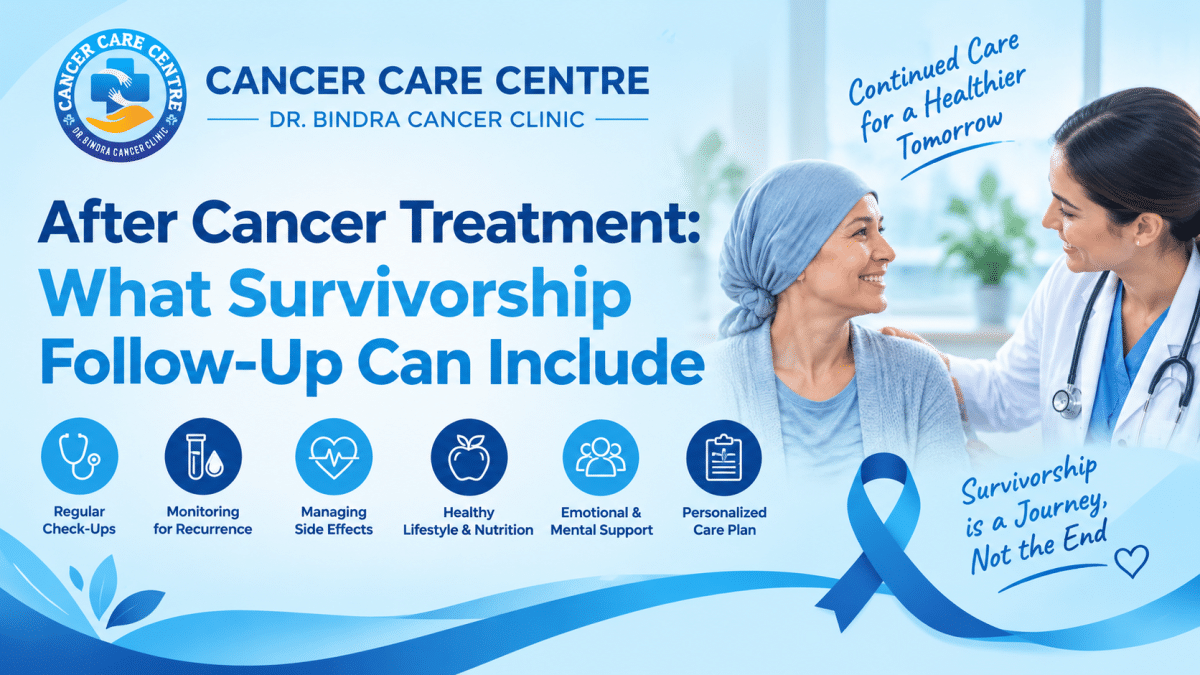
Regular medical checkups
- Follow-up appointments are very important because they allow your doctors to assess your overall well-being after your treatment.
- This is where the doctors need to find out about new emerging symptoms and any changes in your health, and they will suggest new medication to overcome those symptoms.
- Frequent visits allow the doctors to catch the side effects, and it is a time when you can discuss with your doctor how you are feeling, and they can refer you to another specialist or upgrade the treatment.
Monitoring for cancer recurrence
- Your doctors may recommend specific examinations, blood tests, scans and other investigations.
- The purpose is to detect any signs of cancer returning as early as possible, long before physical symptoms appear.
- Every time a survivor feels a minor ache, a normal headache, or fatigue, a common psychological reaction is to worry that the cancer is back.
- Having a recent, clean test result acts as an emotional anchor, helping to quiet those intrusive thoughts and allowing the person to breathe a sigh of relief.
Checking for late effects
- Some effects of cancer treatment may appear months or even years after treatment ended. Because of regular follow-ups, it can help monitor these possible late effects before causing complex complications.
- Doctors use follow-up visits to catch these issues early, when they are easiest to manage.
- Some treatments can slightly increase the risk of developing a different type of cancer years later; doctors continue routine screenings like mammograms, colonoscopies, or skin checks.
Healthy lifestyle support
- Follow-ups are not only about medical tests; they are also about what you eat, drink, and do in your daily activities.
- Your health care team will discuss how to take care of physical activity, nutrition, smoking, weight management and other healthy lifestyle habits.
- Your survivorship care plan may include recommendations suited to your health and treatment history.
People who are looking for cancer survivorship follow-up in Ludhiana can discuss their post-treatment needs with their oncology team. They provide treatment based on your individual cancer history. You are supposed to keep your treatment records, tests, reports, medication list and notes about new or ongoing symptoms. This can help your health care team understand your health history and plan appropriate follow-up.
A simple cancer survivorship follow-up guide.
- You have to bear in mind that follow-up care is an ongoing process, not a single final appointment.
- Maintain your medical records, schedule the recommended checkups, report any persistent or unusual symptoms, and don’t be afraid to ask questions whenever something isn’t clear.
- A comprehensive cancer survivorship follow-up guide should be a helpful roadmap and a friendly companion.
- It needs to remind you to watch your health closely, speak up for what you need, and be gentle with yourself as you heal.
- It should also focus on late effects, emotional well-being, general health and maintaining quality of life because finishing treatment cures the disease, but it does not instantly restore your health or your life.
Final thoughts: Your cancer treatment may be over, but your care doesn’t have to be. Regular survivorship follow-up gives you a preventive plan to stay safe, get proper guidance and actively take control of your future health.
Successfully finishing the treatment is a big achievement, and also keep in mind to take care of your health. Make sure to attend these clinical visits regularly because they show you the progress of your health. When going for follow-up visits, it gives your doctors access to identify side effects so they can provide the treatment needed. Having an open conversation with your health experts can help you boost confidence and allow the recovery process to move smoothly. You should remember that the end of treatment is not the end of your care but rather the beginning of a new chapter in survivorship.
Our clinic specializes in treating patients suffering from different cancer problems. The main aim is to give our patients a homeopathic treatment approach so that they can live comfortably and enjoy every phase of life. Dr Manpreet Singh Bindra provides exclusive homeopathic management for kidney patients, utilizing tailored clinical protocols and organ-specific treatments designed to support ailing kidneys. At Bindra Cancer Clinic, we ensure to give our patients homeopathic options designed to help manage comfort and quality of life during your primary cancer recovery.
References
The information from this blog was extracted from the National Cancer Institute, which provides guidance on follow-up medical care and treatment care. MGM Cancer Institute provides data on follow-up care after cancer treatment, including regular monitoring, management of long-term effects and survivorship care planning.
FAQ’s
- What happens during a typical follow-up appointment?
The doctors will be asking about your current symptoms, performing physical examinations, reviewing any necessary blood tests to check for potential side effects and offering lifestyle counseling.
- Do I need follow-up sessions once cancer treatment ends?
Yes, absolutely; they are needed because they are part of your recovery process, and regular checkups and tests help catch these issues early.
- Is it safe to use complementary therapies such as homeopathy alongside standard oncology?
Yes, some patients choose to use complementary approaches to care and support their overall well-being during the recovery process.
- What are the steps I should take when I visit an integrative clinic?
Never delay or postpone chemotherapy, surgeries, scans, or screenings required by your conventional oncology team.
- Does scientific evidence support the use of homeopathy as a primary cancer treatment?
No, they don’t. They can be used as a complementary approach to manage some symptoms, but are not a substitute for cancer treatment such as surgery and chemotherapy