
Chronic Lymphocytic Leukemia: Symptoms, Diagnosis and Treatment
Chronic Lymphocytic Leukemia, commonly known as CLL, is a type of cancer that affects certain white blood cells called lymphocytes.
Unlike some rapidly progressing forms of leukaemia, CLL often develops slowly. In fact, some people have no symptoms when the condition is first discovered. It may be detected during a routine blood test performed for an unrelated reason.
What Is Chronic Lymphocytic Leukemia?
CLL usually develops from B lymphocytes, which are cells involved in the immune system.
In CLL, abnormal lymphocytes gradually accumulate in the blood and bone marrow. As the disease progresses, these cells may also collect in the lymph nodes, spleen and other tissues.
What Are the Symptoms of CLL?
Many people with early CLL have no symptoms.
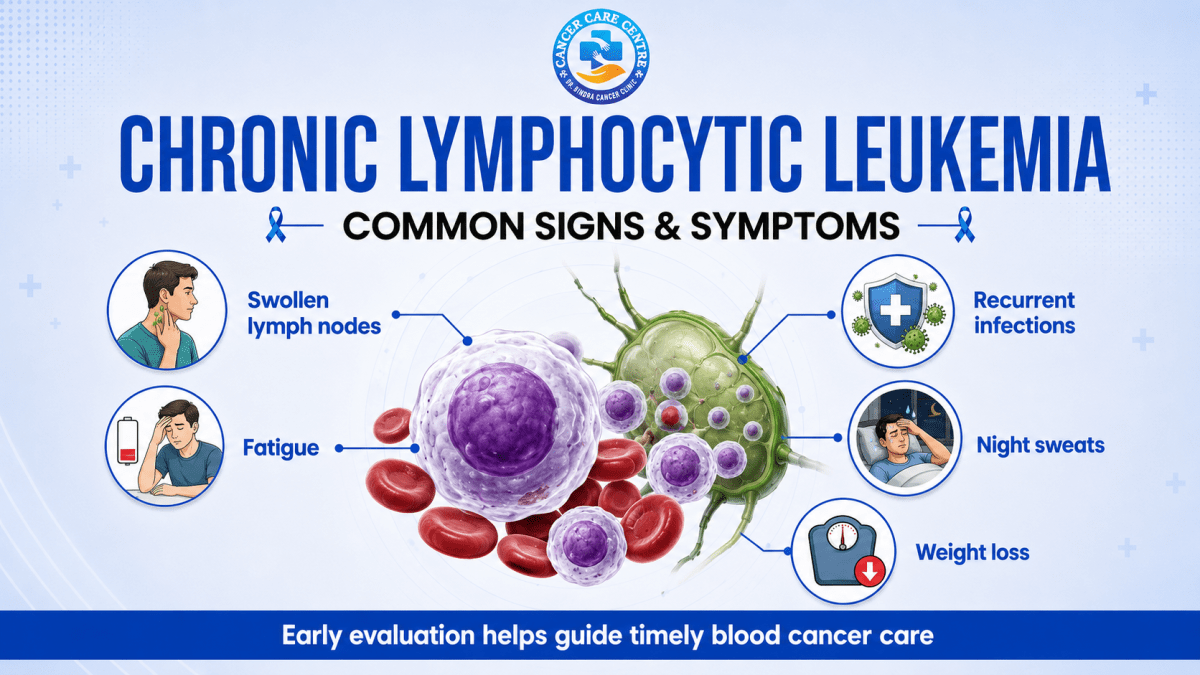
When symptoms develop, they may include:
- Persistent tiredness
- Painless swelling of lymph nodes
- Repeated infections
- Unexplained fever
- Drenching night sweats
- Unexplained weight loss
- Fullness or discomfort in the abdomen due to an enlarged spleen
- Easy bruising or bleeding in some patients
These symptoms can also occur due to many other medical conditions and do not automatically mean that a person has CLL.
How Is CLL Diagnosed?
Blood investigations are extremely important in diagnosing CLL.
Complete Blood Count
A complete blood count or CBC measures the number of red blood cells, white blood cells and platelets. Patients with CLL may have an unusually high number of lymphocytes.
Peripheral Blood Examination
The appearance of blood cells may be studied under a microscope.
Flow Cytometry
Flow cytometry identifies specific markers on abnormal lymphocytes and helps doctors differentiate CLL from other blood-related disorders.
Genetic and Molecular Tests
Additional tests may be performed to look for certain genetic changes because these findings can influence prognosis and help doctors choose treatment.
Why Are Some CLL Patients Not Treated Immediately?
This is one of the most confusing aspects of CLL for patients and their families.
A person may hear the word “leukaemia” and naturally expect treatment to begin immediately. However, early and stable CLL without significant symptoms may sometimes be managed with active monitoring, often called watchful waiting.
Watchful waiting does not mean ignoring the disease. The patient continues regular medical follow-up, blood tests and examinations.
When May Treatment Be Required?
Treatment may be considered when CLL begins causing clinically significant problems.
Examples may include:
- Progressively worsening blood counts
- Significant anaemia
- Low platelet levels related to the disease
- Increasingly enlarged lymph nodes
- A progressively enlarged spleen
- Significant disease-related fatigue
- Persistent fever or night sweats
- Unexplained weight loss
What Are the Treatment Options for CLL?
Modern CLL treatment has changed considerably, with targeted medicines playing an increasingly important role.
Depending on the individual case, treatment may include:
- Targeted therapy
- Monoclonal antibody therapy
- Combination drug treatments
- Selected chemotherapy-based regimens
- Stem cell transplantation in carefully selected situations
The most suitable approach depends on the patient’s age, overall health, genetic features of the CLL, symptoms and previous treatment history.
Are CLL and Small Lymphocytic Lymphoma the Same?
CLL and Small Lymphocytic Lymphoma, or SLL, are closely related diseases involving similar abnormal lymphocytes.
In CLL, abnormal cells are more prominent in the blood and bone marrow. In SLL, the disease is found mainly in lymph nodes or lymphatic tissues.
Why Regular Follow-Up Is Important
Even when immediate treatment is not required, CLL needs appropriate monitoring.
Patients should inform their doctor about changes such as worsening fatigue, repeated infections, new lymph-node swelling, persistent fever, significant night sweats or unexplained weight loss.
Conclusion
A diagnosis of CLL does not automatically mean that chemotherapy or another treatment needs to start immediately.
Some patients can remain stable for a long period under careful observation, while others may require active treatment based on symptoms, blood counts and disease behaviour.
The treatment plan should therefore be based on the characteristics of the individual patient’s CLL rather than the diagnosis alone.
This article is for general educational purposes and should not replace individual advice from a haematologist or cancer specialist.