
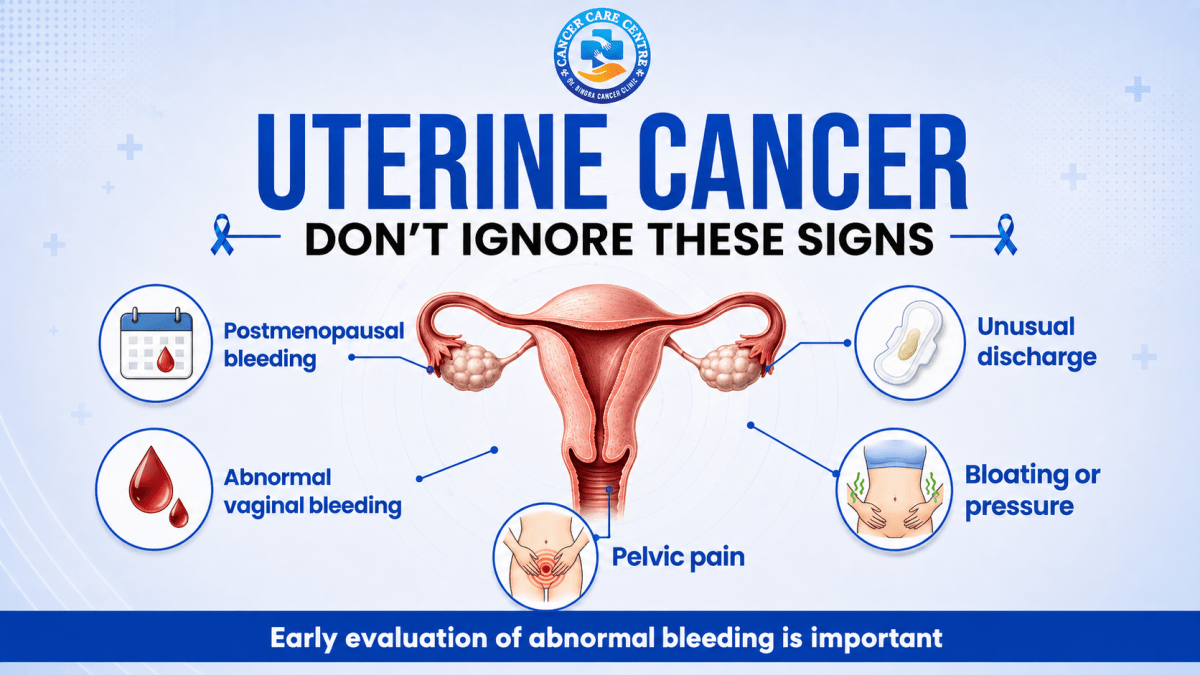
Uterine Cancer: Symptoms, Diagnosis and Treatment
Uterine cancer develops in tissues of the uterus. The most common form is endometrial cancer, which begins in the inner lining of the uterus called the endometrium.
Another less common group, known as uterine sarcoma, develops from the muscle or supporting tissues of the uterus.
What Is Endometrial Cancer?
Endometrial cancer develops when cells within the lining of the uterus begin growing abnormally and uncontrollably.
It is the most common type of uterine cancer.
What Are the Symptoms of Uterine Cancer?
Abnormal vaginal bleeding is one of the most important warning signs.
Symptoms may include:
- Bleeding after menopause
- Bleeding between menstrual periods
- Unusually heavy or prolonged bleeding
- Abnormal vaginal discharge
- Pelvic discomfort or pain
Why Should Postmenopausal Bleeding Be Investigated?
Bleeding after menopause is not always caused by cancer, but it should always be medically evaluated.
Endometrial cancer can sometimes cause bleeding while the disease is still at an earlier stage, making this symptom particularly important.
Does a Pap Smear Detect Uterine Cancer?
A Pap test is mainly designed to identify abnormal cervical cells.
It is not considered a reliable screening test for endometrial cancer.
How Is Uterine Cancer Diagnosed?
Investigations may include:
- Pelvic examination
- Transvaginal ultrasound
- Endometrial biopsy
- Hysteroscopy
- CT scan or MRI after diagnosis when required
Tissue examination through biopsy provides the definitive diagnosis in most cases.
What Are the Risk Factors for Endometrial Cancer?
Factors that can influence risk include:
- Increasing age
- Obesity
- Certain hormonal exposures
- Endometrial hyperplasia
- Some metabolic conditions
- Tamoxifen exposure in selected patients
- Certain inherited cancer syndromes
A risk factor increases probability but does not mean cancer will definitely occur.
How Is Endometrial Cancer Treated?
Surgery
Surgery is commonly the main treatment for early-stage endometrial cancer.
The procedure may involve removal of the uterus along with the fallopian tubes and ovaries. Lymph nodes may also be assessed depending on the individual case.
Radiation Therapy
Radiation may be recommended when the pathology or stage indicates a higher risk of recurrence.
Chemotherapy
Chemotherapy can be used in selected patients with higher-risk, advanced or recurrent disease.
Hormone Therapy
Certain hormone-sensitive uterine cancers may respond to hormonal treatment.
Immunotherapy and Targeted Treatment
Molecular features of endometrial cancer are becoming increasingly important in modern treatment planning.
Tests such as mismatch-repair assessment may help doctors determine whether selected patients could benefit from particular treatments.
Is Routine Screening Available for Uterine Cancer?
For women at average risk without symptoms, there is currently no standard population screening programme comparable to cervical cancer screening.
Awareness of abnormal bleeding is therefore especially important.
Is Uterine Cancer the Same as Cervical Cancer?
No.
Uterine and cervical cancers arise in different parts of the reproductive system and differ in causes, screening methods and treatment.
Conclusion
One of the most important messages regarding uterine cancer is simple: vaginal bleeding after menopause should never be ignored.
Most cases of postmenopausal bleeding are not cancer, but timely evaluation can help identify endometrial abnormalities at an earlier stage.
This article is for educational purposes and does not replace consultation with a qualified healthcare professional.