Bone Marrow Transplant in Blood Cancers: What Patients Should Know
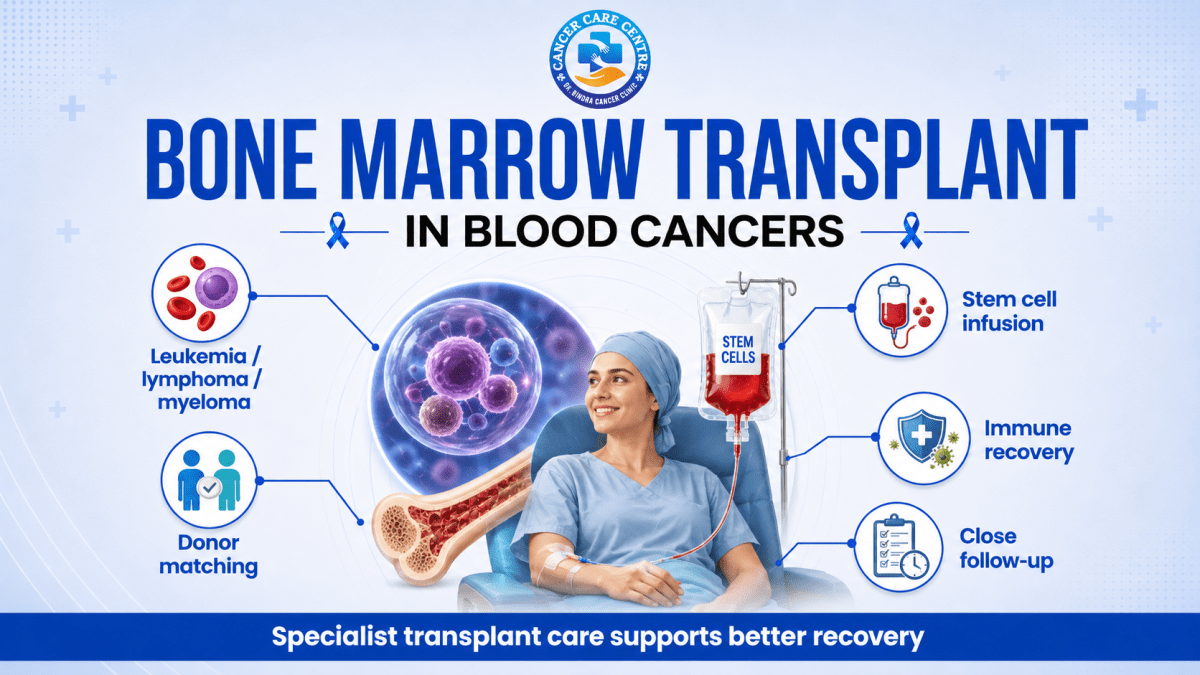
Bone marrow transplant is an important treatment option for selected patients with certain blood cancers. However, not every patient with leukaemia, lymphoma or multiple myeloma requires a transplant.
The decision depends on the exact disease, its risk category, response to previous treatment, patient’s age, overall health and several other factors.
What Is a Bone Marrow Transplant?
The term bone marrow transplant is commonly used, although the broader medical term is haematopoietic stem cell transplantation.
Stem cells are immature cells capable of producing the major blood-cell types:
- Red blood cells
- White blood cells
- Platelets
During transplantation, healthy blood-forming stem cells are given to the patient to restore blood-cell production after intensive treatment.
Which Blood Cancers May Require Stem Cell Transplant?
Stem cell transplantation may be considered in selected patients with:
- Acute leukaemias
- Some chronic leukaemias
- Hodgkin lymphoma
- Non-Hodgkin lymphoma
- Multiple myeloma
- Myelodysplastic syndromes
- Certain other bone marrow disorders
The diagnosis alone does not determine whether transplantation is required.
What Are the Main Types of Stem Cell Transplant?
Autologous Stem Cell Transplant
In an autologous transplant, stem cells are collected from the patient’s own body before intensive treatment.
The cells are stored and later returned to the patient after high-dose therapy.
This approach is commonly used in selected patients with multiple myeloma and lymphoma.
Allogeneic Stem Cell Transplant
In an allogeneic transplant, stem cells come from another person known as a donor.
The donor may be a brother, sister, unrelated matched donor or another suitable donor depending on the patient’s situation.
What Is HLA Matching?
For an allogeneic transplant, doctors evaluate tissue markers known as Human Leukocyte Antigens or HLA.
Finding an appropriate HLA match helps reduce complications and improves the chances of successful transplantation.
Having the same blood group does not automatically mean that two people are suitable stem cell matches.
What Happens Before a Stem Cell Transplant?
Patients usually undergo detailed evaluation before transplantation.
This may include:
- Heart evaluation
- Lung-function assessment
- Kidney and liver tests
- Screening for infections
- Assessment of cancer status
- Review of previous treatments
- General fitness assessment
What Is Conditioning Treatment?
Before stem cells are infused, the patient receives treatment known as conditioning.
This often involves chemotherapy and, in certain cases, radiation therapy.
Conditioning helps destroy remaining cancer cells, suppress the immune system where necessary and prepare the bone marrow environment for the transplanted stem cells.
What Happens on Transplant Day?
The actual stem cell infusion usually does not involve major surgery.
Stem cells are generally given through a vein, similar to a blood transfusion. The cells travel through the bloodstream and eventually settle within the bone marrow.
What Is Engraftment?
Engraftment refers to the stage when transplanted stem cells begin producing new blood cells successfully.
Doctors monitor regular blood counts to determine whether engraftment is occurring.
During the period before sufficient blood cells are produced, patients may have an increased risk of infection, anaemia and bleeding.
What Is Graft-Versus-Host Disease?
Graft-Versus-Host Disease, commonly called GVHD, can occur after an allogeneic transplant.
It happens when donor immune cells recognise the patient’s tissues as foreign and attack them.
GVHD can affect areas such as:
- Skin
- Liver
- Digestive tract
Medicines are commonly used to reduce and control this immune reaction.
What Are the Possible Risks of Stem Cell Transplant?
Possible complications may include:
- Serious infections
- Low blood counts
- Bleeding
- Anaemia
- Mouth sores
- Nausea
- Fatigue
- Organ-related complications
- Fertility problems
- GVHD in allogeneic transplantation
How Long Does Recovery Take?
Recovery varies considerably between patients.
Blood counts may begin recovering within weeks, but rebuilding the immune system can take several months or longer, particularly after an allogeneic transplant.
Patients require close follow-up, infection precautions and regular medical monitoring.
Does Every Blood Cancer Patient Need a Transplant?
No. Many blood cancers can be successfully managed using targeted medicines, chemotherapy, immunotherapy or other modern treatments without transplantation.
A stem cell transplant is recommended only when doctors believe that its potential benefits justify the associated risks.
Conclusion
A bone marrow or stem cell transplant is a highly specialised treatment rather than a routine procedure for every blood cancer.
Patients being considered for transplantation should discuss the expected benefits, risks, donor options and alternative treatments with an experienced haematology and transplant team.
This article provides general information and should not replace personalised medical advice.