Ovarian Cancer: Symptoms, Diagnosis and Treatment
Ovarian cancer develops when abnormal cells involving the ovary begin growing uncontrollably.
The disease can sometimes be difficult to recognise early because initial symptoms may resemble common digestive or urinary problems.
What Are the Symptoms of Ovarian Cancer?
Possible symptoms include:
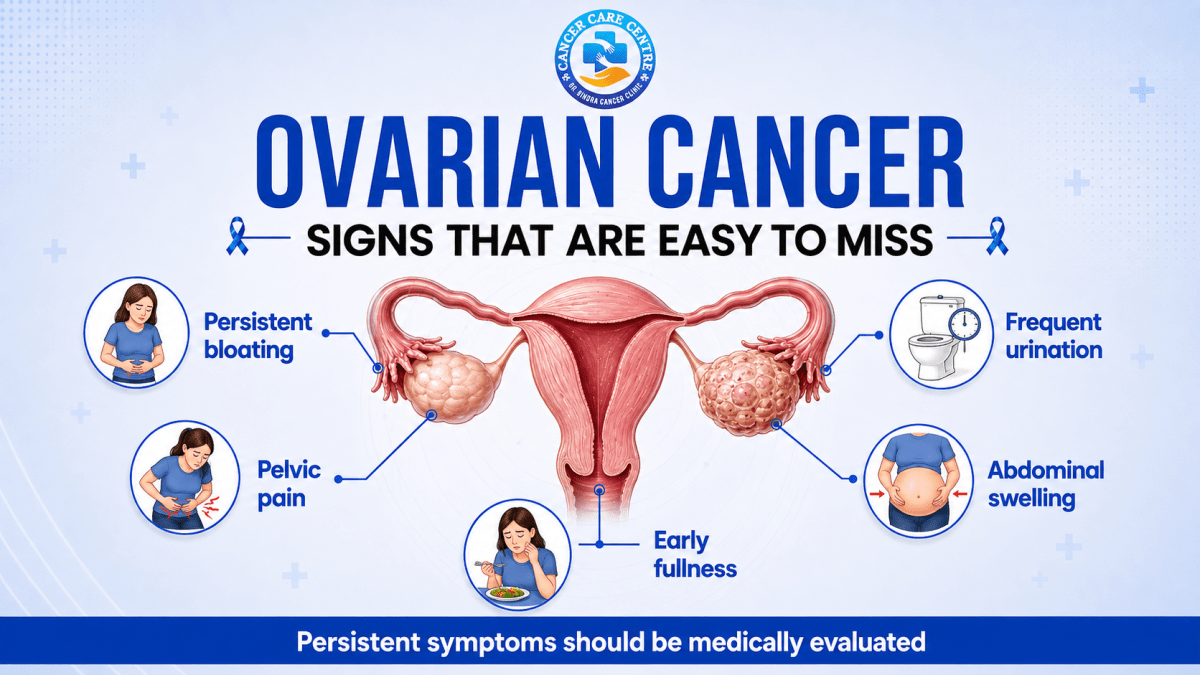
- Persistent abdominal bloating
- Increasing abdominal size
- Pelvic or abdominal discomfort
- Feeling full quickly while eating
- Difficulty eating normal-sized meals
- Changes in bowel habits
- Urinary urgency or frequency
- Unexplained weight changes
- Persistent fatigue in some patients
When Should Bloating Be Investigated?
Occasional bloating is extremely common and is usually not related to cancer.
However, symptoms that are new, persistent, frequent or progressively worsening should be discussed with a healthcare professional.
Are All Ovarian Cancers the Same?
No. Several different types of cancer can develop in the ovaries.
Major categories include:
- Epithelial ovarian cancers
- Germ-cell tumours
- Stromal tumours
Epithelial ovarian cancer is the most common category in adults.
How Is Ovarian Cancer Diagnosed?
Evaluation may include:
- Medical history
- Pelvic examination
- Ultrasound
- CT scan or other imaging
- Blood investigations
- Selected tumour markers
- Pathology examination
Does a High CA-125 Level Mean Ovarian Cancer?
No. CA-125 is a tumour marker that can be elevated in ovarian cancer, but it can also rise in several non-cancerous conditions.
It should not be interpreted on its own as proof of cancer.
What Is the Role of Genetics in Ovarian Cancer?
Inherited gene changes can contribute to some ovarian cancers.
BRCA1 and BRCA2 are among the better-known genes associated with hereditary ovarian and breast cancer risk.
Genetic or molecular testing can sometimes provide information relevant both to family risk and treatment selection.
How Is Ovarian Cancer Treated?
Surgery
Surgery plays an important role in ovarian cancer treatment.
For more extensive disease, surgeons may perform cytoreductive or debulking surgery with the aim of safely removing as much visible cancer as possible.
Chemotherapy
Chemotherapy is commonly used as part of ovarian cancer treatment.
Depending on the situation, it may be given after surgery or before surgery.
Targeted Therapy
Some patients may benefit from targeted medicines based on tumour characteristics, genetic findings and previous treatment.
Is There a Routine Ovarian Cancer Screening Test?
There is currently no simple standard screening test recommended for all average-risk women that reliably identifies ovarian cancer at an early stage.
Women with a strong family history or known inherited cancer-risk gene may need individualised specialist advice.
Does Every Ovarian Cyst Mean Cancer?
No. Ovarian cysts are common and many are benign.
Doctors consider factors such as:
- Age
- Menopausal status
- Appearance of the cyst on ultrasound
- Size
- Symptoms
- Changes over time
Conclusion
Ovarian cancer symptoms can be subtle. The key is not to panic about every episode of bloating but to pay attention to persistent or unexplained changes.
New, frequent bloating, early fullness, pelvic discomfort or unexplained abdominal enlargement should be medically evaluated rather than repeatedly self-treated.
This article is intended for educational purposes only and does not replace personalised medical assessment.