What to Do When Someone in the Family Is Diagnosed With Cancer?
Hearing that someone in your family has been diagnosed with cancer can be overwhelming. Fear, uncertainty and countless questions may arise at the same time. Family members may immediately start searching online, asking friends for recommendations or worrying about what will happen next.
Although cancer is a serious diagnosis, the first few days should ideally be focused on understanding the situation rather than making decisions out of fear. Cancer is not one single disease, and treatment can vary significantly depending on the type of cancer, stage, pathology findings, biomarkers and the overall health of the patient.
Start by Understanding the Exact Cancer Diagnosis
The word “cancer” alone does not provide enough information to determine treatment. Two people may develop cancer in the same organ but require completely different treatment approaches.
Families should try to understand:
- The exact type of cancer
- The organ or tissue where the cancer started
- The stage of the disease
- The tumour grade, where applicable
- Whether lymph nodes are involved
- Whether the cancer has spread to another part of the body
- Whether biomarker, receptor or molecular testing is required
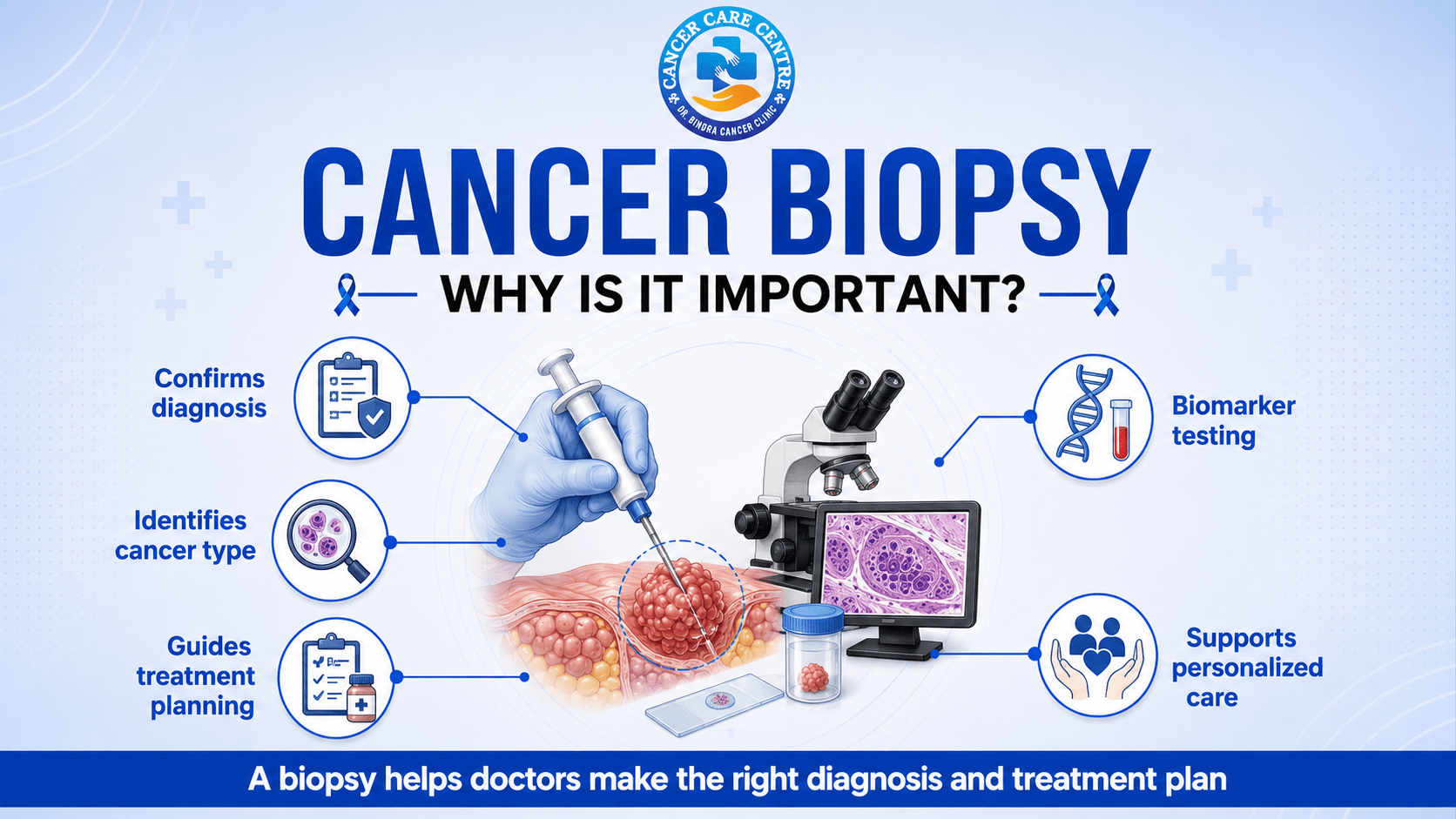
The pathology or biopsy report is often one of the most important documents used to establish the exact diagnosis.
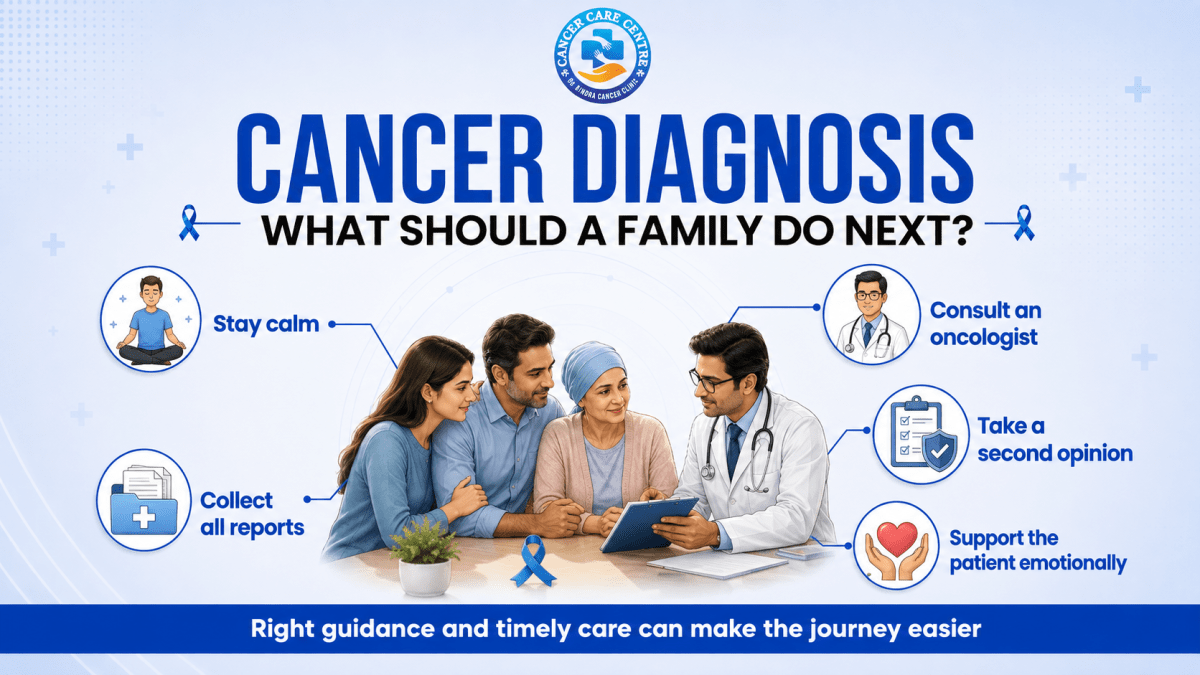
Collect and Organise All Medical Records
One practical step that can make future consultations much easier is to maintain a complete medical file.
Keep copies of:
- Biopsy and histopathology reports
- CT scan, MRI, PET-CT and ultrasound reports
- Imaging CDs or digital scans
- Blood investigation reports
- Hospital discharge summaries
- Previous prescriptions
- Details of existing diseases such as diabetes, hypertension or heart disease
- A list of medicines and supplements currently being taken
Having all reports available helps doctors understand the case more efficiently and reduces unnecessary repetition of investigations.
Consult the Right Cancer Specialist
Cancer treatment often requires a multidisciplinary approach. Depending on the type of cancer, the treating team may include a medical oncologist, surgical oncologist, radiation oncologist, haematologist, pathologist, radiologist and other specialists.
Treatment options may include:
- Surgery
- Chemotherapy
- Radiation therapy
- Hormone therapy
- Targeted therapy
- Immunotherapy
- Stem cell transplantation in selected blood cancers
Not every patient requires all of these treatments. The sequence and combination are decided according to the individual case.
Consider Taking a Second Medical Opinion
Taking a second opinion does not necessarily mean that the first doctor is wrong. It can help families understand available treatment options and feel more confident about major decisions.
A second opinion may be particularly useful when:
- The cancer is uncommon or difficult to classify
- A major operation has been advised
- Several treatment options are available
- The cancer has returned after previous treatment
- The diagnosis or pathology findings are unclear
- The family does not fully understand the proposed treatment plan
Ask Questions During the Cancer Consultation
Families should not hesitate to ask questions. Writing them down before the appointment can be helpful.
Important questions may include:
- What exact type of cancer has been diagnosed?
- What is the stage?
- Has the cancer spread?
- What is the purpose of the recommended treatment?
- What treatment options are available?
- What are the expected benefits and possible side effects?
- How soon should treatment start?
- Are additional tests required before treatment?
- How will doctors assess whether treatment is working?
Support the Patient Emotionally Without Taking Away Their Independence
A cancer diagnosis affects emotional health as well as physical health. Some patients want to discuss their illness openly, while others need more privacy and time.
Family members can help by accompanying the patient to appointments, organising reports, helping with meals and daily responsibilities and simply being available to listen.
At the same time, the patient should remain involved in important decisions whenever possible.
Can Homoeopathy Be Considered Alongside Conventional Cancer Treatment?
Some patients and families may wish to explore Homoeopathy or other complementary approaches while undergoing conventional cancer treatment.
If a patient is interested in Homoeopathy, an opinion may be taken from a qualified Homoeopathy doctor who has experience dealing with cancer cases. The purpose should be to discuss whether a supportive or adjuvant approach can be appropriately coordinated with the patient’s existing treatment.
Homoeopathy should not be used as a replacement for or a reason to delay oncologist-recommended surgery, chemotherapy, radiation therapy, targeted therapy, immunotherapy or other evidence-based cancer treatment.
The patient’s oncologist should also be informed about any Homoeopathic medicines, supplements or complementary therapies being used so that care remains coordinated and potential interactions or treatment-related concerns can be considered.
Avoid Making Major Treatment Decisions Based Only on Internet Information
The internet can help patients understand medical terminology, but online information cannot determine the correct treatment for an individual patient.
Cancer treatment decisions depend on pathology, stage, biomarkers, age, general health and several other factors. Information found online should therefore be used for education rather than self-treatment.
Take One Step at a Time
The first days after a cancer diagnosis can feel overwhelming, but families do not have to understand everything immediately.
Start by confirming the diagnosis, collecting reports, understanding the stage, consulting appropriate specialists and asking questions. Once the medical situation is clearly understood, treatment decisions become easier to navigate.
A well-informed and supportive family can play an important role throughout a patient’s cancer journey.
When Should You Seek Medical Advice?
If you or a family member has recently received a cancer diagnosis and there is confusion regarding reports, treatment options or supportive care, discuss the case with qualified healthcare professionals experienced in cancer management.
This article is intended for patient education and does not replace individual medical advice, diagnosis or treatment.